

Train of Hope: Survival Game
BELKA GAMES
I approached Train of Hope: Survival Game expecting a straightforward survival simulator, but its strongest appeal is the way it puts a moving train at the center of the experience. Instead of treating the setting as a static map with a few decorations, the game makes travel feel like part of the problem: you are trying to keep progress going while dealing with a damaged, dangerous version of America. That gives the familiar survival formula a useful sense of direction.
This is a free simulation game from BELKA GAMES, aimed at Teen players. It has already passed 500 thousand installs, with an average rating of 4.4 from around 19 thousand ratings. Those figures suggest that the basic concept connects with a sizeable audience, although the game still asks you to be comfortable with resource management and the occasional pressure to consider an in-app purchase.
What to expect when you first enter the ruined world
The first thing to understand is that this is not a relaxed train decoration game, and it is not a pure action title either. Its rhythm comes from making choices about movement, survival needs, and the condition of your journey. I found it more satisfying when I treated each objective as part of a larger route rather than rushing through individual tasks.
The post-apocalyptic setting does a lot of work. The lush scenery gives the world a contrast that many bleak survival games lack: nature has returned, but that does not make the environment safe. The train gives the adventure a clear identity, while the surrounding landscape creates the reason to leave safety, search for useful resources, and decide what deserves attention first.
That combination makes the game a good fit for someone who likes survival systems but wants a stronger sense of purpose than simply building a base forever. If you enjoy checking supplies, improving a home-like space, and then heading out to solve the next problem, the structure should feel natural. If you prefer immediate combat or a completely open-ended sandbox, the guided progression may feel restrictive.
Related News

Threads in Real Life: Who Should Join, Lurk, or Leave

How SHEIN Turned Shopping Into an Endless Content Feed

How to Make Fortnite Feel Smarter on Mobile

Should You Switch to Microsoft Outlook on Mobile?

Why Gallery Keeps Pulling Users Back

X Review: Why Its Network Still Matters
I also noticed that the game is easier to appreciate in short, focused sessions than during a long, distracted play period. A quick visit can be enough to handle a task, prepare for the next outing, or make a useful improvement. When I tried to play without paying attention to what the current goal required, I was more likely to waste time collecting things that did not help immediately.
The train is more than a visual theme
The train changes how I think about progress. In a conventional settlement simulator, upgrades often feel permanent and comfortable. Here, the idea of keeping a journey alive adds urgency. Every improvement feels connected to the next stretch of the route, and the moving setting prevents the game from becoming just another stationary crafting screen.
That does not mean every moment is tense. Much of the experience involves planning, gathering, and following the current direction. The payoff comes when those quieter actions make the next objective easier. I recommend paying attention to the connection between an objective and the items it asks for, because that relationship is more useful than collecting everything simply because it is available.
Gallery
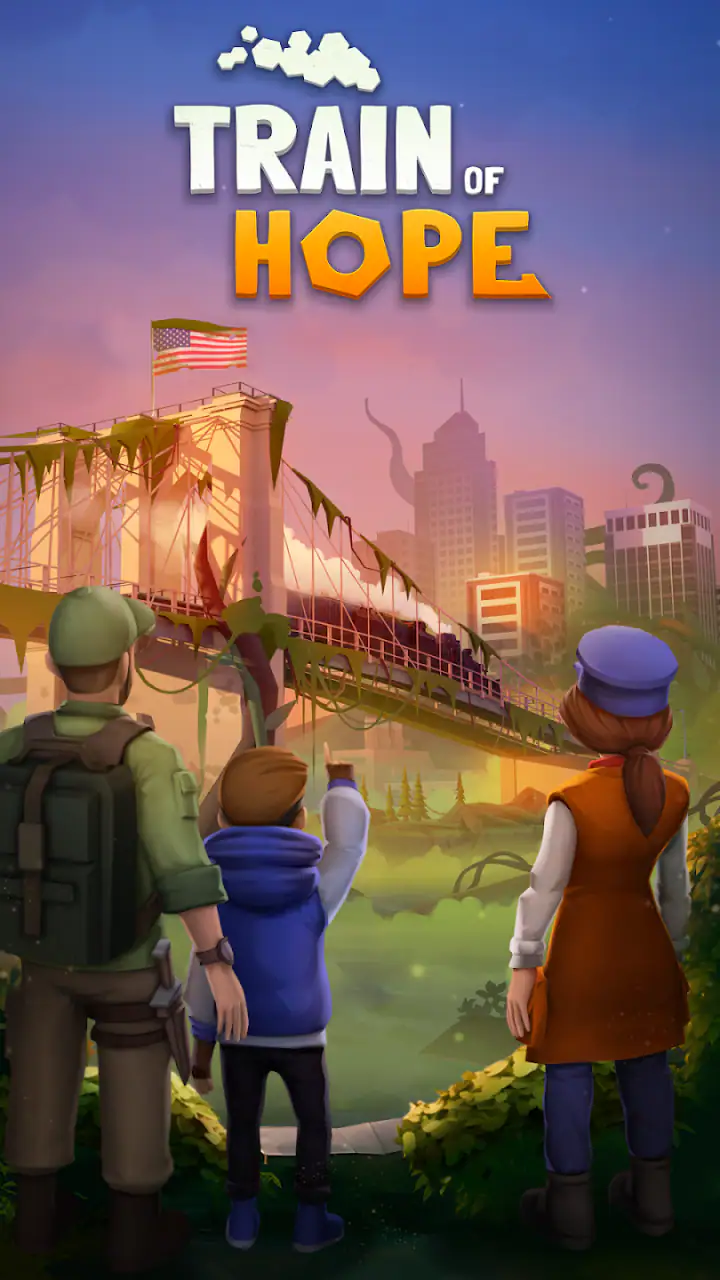
The visual presentation also helps the game stand apart from harsher survival games. The greenery makes the world inviting enough to explore, while the ruined setting keeps the mood uneasy. I would not describe it as a purely dark experience; its appeal is closer to rebuilding hope in a place that has clearly suffered.
Who will enjoy it, and who may want another kind of game
I would recommend it to players who like a guided survival adventure with a clear setting, manageable objectives, and a mobile-friendly pace. It is especially suitable if you enjoy seeing a central base or vehicle become more useful over time. The train provides a visible sense of advancement, which can be more motivating than a list of disconnected upgrades.
I would be more cautious recommending it to someone who dislikes waiting, repeated resource gathering, or systems that may encourage spending. The game is free to download, but in-app purchases range from $0.99 to $99.99 per item. That does not automatically make the experience unfair, yet it is a reminder to decide early whether you want to play patiently or pay for convenience when the game presents that choice.
Players looking for a traditional city builder may prefer a game focused entirely on construction and decoration. Players seeking a combat-first survival title may also find Train of Hope less direct than expected. Its better comparison is with story-led survival management: the journey and its practical decisions matter as much as the individual collection tasks.
From installation to your first meaningful success
Start with the practical setup
The game supports devices running Android 7.0 or later, and the current version is 1.23.0. Once installed, I suggest beginning with a few uninterrupted minutes rather than opening it while you are rushing between tasks. The early guidance is much easier to follow when you can read the objective, inspect the nearby options, and understand what the game wants you to do next.
Do not judge the entire experience by the first tutorial actions. Early survival games often introduce their systems one at a time, and this one benefits from letting the sequence establish the relationship between travel, supplies, and improvements. My advice is to follow the immediate instruction first, then pause before spending anything on a choice that is not clearly connected to your current goal.
A useful first habit is to separate three kinds of decisions in your head. Some actions keep the present objective moving, some improve future efficiency, and some are optional conveniences. New players often treat all available actions as equally urgent, but that is how resources disappear before the next required step.
Because the game is rated Teen, parents should consider whether its survival themes and post-apocalyptic atmosphere suit the intended player. The rating is not a reason to avoid it automatically, but it is worth checking before handing the game to a younger child who might expect a gentle train adventure based on the title alone.
How to reach the first satisfying result
Your first meaningful success is not simply opening a menu or completing a tutorial tap. It is the moment when you gather what the current task needs, use it deliberately, and see the journey become more capable as a result. To reach that point, I recommend reading the objective before exploring widely and collecting only what supports that objective at first.
When several actions become available, I prioritize the one that removes a direct obstacle to progress. If a task needs a particular resource, I look for that resource before improving something decorative or speculative. This sounds obvious, but it is one of the easiest ways to avoid the early-game feeling that you are busy without actually moving forward.
Another practical tip is to use the train as your mental checkpoint. Before leaving an area or starting a new objective, I ask myself whether the current trip is meant to bring back supplies, unlock progress, or solve a specific problem. That small question keeps exploration focused and makes the return feel purposeful instead of random.
I also recommend resisting the urge to spend premium currency or accept a shortcut immediately. The first sessions are useful for learning the normal pace. Once you know which bottleneck genuinely annoys you, you can decide whether convenience is worth paying for. Spending before understanding the loop can make the game feel more expensive than it needs to be.
Three habits that make the early game smoother
- Match collection to the active objective. Gathering every visible item can feel productive, but carrying attention toward the next requirement usually saves more time than broad, unfocused searching.
- Upgrade with a reason. A practical improvement that helps the next journey is more valuable early on than an upgrade chosen only because it is available.
- Use short sessions intentionally. A brief session works well for completing one objective, checking supplies, or preparing the next trip; stopping after a clear milestone prevents the game from becoming a vague cycle of taps.
These habits are not complicated, but they address a real source of frustration. Survival games often make players feel underpowered when the real problem is poor prioritization. In Train of Hope, the train-and-route structure gives you a useful way to organize decisions if you pay attention to it.
Confusing moments new players should expect
The most likely early confusion is understanding what deserves attention now and what can wait. A screen may show several possible actions, but visibility does not mean equal importance. I learned to treat the current objective as the filter: if an option does not help complete it or prepare for the next clear step, I postpone it.
Another point of friction is the difference between progress and preparation. Collecting supplies may not produce an immediate dramatic reward, yet it can be the action that makes the following objective possible. On the other hand, gathering without a plan can become repetitive. The useful middle ground is to prepare for a known need rather than stockpiling everything.
Some players may also wonder whether the game is meant to be played competitively or socially. My experience of its appeal comes from the personal survival journey and the management of the train, not from treating it like a competitive action game. If you want constant player-versus-player pressure, this is probably not the right direction. If you prefer setting your own pace within guided goals, it makes more sense.
The free-to-play design can create a second kind of uncertainty. When a purchase appears, I view it as an optional answer to impatience rather than a requirement to understand the game. The sensible approach is to play through the opening normally, observe how often you encounter a bottleneck, and only then decide whether spending fits your budget and expectations.
What to do after the first success
After completing the first substantial objective, do not immediately chase every available activity. Instead, look at what changed: which route or task is now open, what the train needs next, and whether your supplies support another outing. This turns the game from a sequence of instructions into a planning exercise, which is where I think its simulation side becomes most enjoyable.
A realistic everyday scenario is a short evening session after work or school. I would open the game, check the current objective, collect one missing requirement, make the relevant improvement, and stop at the next clear checkpoint. That approach avoids beginning a long expedition when I only have a few minutes, while still giving the session a satisfying result.
For a longer weekend session, I would use the extra time to explore more deliberately and compare optional actions. The key is not to confuse a longer session with permission to spend resources carelessly. More time gives you room to test the systems, not a reason to abandon priorities.
If progress starts to feel slow, first check your workflow before blaming the game. Are you collecting items unrelated to the objective? Are you spending on convenience before identifying the real bottleneck? Are you starting trips without a clear purpose? Those questions often reveal a simple adjustment. If the slower pace still feels unpleasant after that, the game may simply not match your preferred tempo.
How it compares with familiar survival alternatives
Compared with a standard base-building survival game, Train of Hope has a stronger travel identity. The train gives the player a reason to connect separate tasks, while a typical base game may focus more heavily on expanding one permanent location. I prefer this structure when I want progress to feel like a journey rather than an endless construction project.
Compared with a pure resource-management simulator, it has more atmosphere and a clearer emotional setting. The post-apocalyptic landscape and the contrast between lush nature and human ruin make routine gathering feel tied to a larger story. The trade-off is that players who love detailed spreadsheets, deep economic optimization, or total control over every system may find the experience more guided.
Compared with action survival games, the emphasis is less about reacting quickly and more about making sensible choices before the next obstacle. That makes it easier to play casually, but it also means the game will not satisfy someone who needs constant danger on screen. Its tension comes from whether your preparation was good enough, not only from reflexes.
Device expectations, spending, and long-term fit
The minimum operating-system requirement is Android 7.0, which makes the game accessible to many older Android devices. Actual comfort will still depend on the phone or tablet, the amount of free space available, and what else is running, so I would close unnecessary apps if the game feels less responsive than expected.
The game is free, which makes trying the opening a low-risk way to decide whether the train-centered survival loop suits you. The presence of purchases from $0.99 to $99.99 per item means I would treat the store as a deliberate choice rather than part of the normal tutorial. A simple personal rule helps: never buy a shortcut while frustrated, because that is when it is hardest to judge its value clearly.
Its current version, 1.23.0, is useful to note when troubleshooting or discussing the game with another player. I would also keep the app updated through the normal store process, since version differences can affect how menus and progression feel. The developer is BELKA GAMES, and the game has attracted enough attention to build a substantial player base without making popularity a substitute for personal fit.
My recommendation after playing through the opening
I came away seeing Train of Hope as a thoughtful choice for players who want survival management with a destination. The train gives the game its most memorable idea, while the green, damaged landscape keeps exploration visually distinct. I especially like the way small decisions become more meaningful when I connect them to the next stage of the journey.
It is not perfect for every mood. The pace can feel deliberate, resource gathering may test your patience, and the purchase options require self-control if you want to keep the experience entirely free. Someone searching for a fast action game, an unrestricted building sandbox, or a highly competitive multiplayer challenge should look elsewhere.
For a first-time user, my clearest advice is simple: follow the opening objective, collect with purpose, make improvements that remove the next obstacle, and stop at a meaningful checkpoint rather than playing on autopilot. Give the game enough time to show how its train, survival needs, and route-based progress fit together. If that combination sounds more appealing than constant combat or endless decoration, this is a free survival journey worth trying.
With its Teen rating, Android 7.0 support, free entry point, and 4.4 average from around 19 thousand ratings, it is easy to sample without committing to a purchase. My final view is positive but measured: the game works best when you enjoy planning a trip and watching a fragile moving home become more capable. That specific sense of forward motion is what makes it stand out from the usual survival alternatives.
FAQs for Train of Hope: Survival Game
What is Train of Hope: Survival Game about?
Train of Hope: Survival Game is a post-apocalyptic adventure and survival game centered around a moving train that acts as your main shelter and base. You explore dangerous areas, collect resources, search abandoned locations, meet survivors, and make decisions that affect your journey. The game combines exploration, crafting, resource management, story events, and survival challenges in a world affected by a mysterious catastrophe.
Does Train of Hope: Survival Game require an internet connection?
The game may require an internet connection for downloading additional files, receiving updates, synchronizing progress, displaying certain events, or accessing online services. Some gameplay sections may be available offline, but this can depend on the version installed and the device being used. For the smoothest experience, it is recommended to launch the game while connected to Wi-Fi and check its current store requirements before downloading.
Is Train of Hope: Survival Game free to play?
Train of Hope: Survival Game can generally be downloaded and played without an upfront purchase, but it may include optional in-app purchases. These purchases can provide extra resources, speed up progress, unlock convenience items, or support limited-time activities. Players who prefer not to spend money should review the game’s settings and enable purchase restrictions, especially if children also use the device.
What devices are compatible with Train of Hope: Survival Game?
Compatibility depends on the operating system, available storage, device hardware, and the minimum version supported by the current release. Because the game includes exploration, animated environments, and resource-heavy scenes, older phones or tablets may experience longer loading times, reduced visual quality, or occasional performance issues. Check the official Google Play or App Store listing before installation for the latest requirements.
What should new players know before starting the game?
New players should avoid spending resources too quickly and should regularly collect materials, upgrade the train, and improve the abilities of their survivors. Exploration can involve danger, so preparing supplies before leaving the train is important. It is also worth reading dialogue and event choices carefully, since decisions may influence relationships, available rewards, or the direction of certain story moments.
Pros
- Strong survival mechanics with meaningful resource-management decisions.
- Atmospheric post-apocalyptic setting creates a memorable sense of tension.
- Train upgrades provide clear long-term goals and progression.
- Exploration rewards curiosity with supplies
- encounters
- and useful discoveries.
- Playable in short sessions while still offering plenty of strategic depth.
Cons
- Resource shortages can make early progress feel unnecessarily restrictive.
- Some encounters rely heavily on chance rather than player skill.
- The interface may feel crowded on smaller phone screens.
- Progression can become repetitive after mastering the main survival loop.
- Battery usage may be noticeable during longer gameplay sessions.


